After several years of elevated construction activity, self-storage development is slowing across the country. While this could provide some relief to existing operators, the self-storage investment outlook for 2027 will largely depend on individual markets and their supply and demand fundamentals.
According to Yardi Matrix’s August 2026 Self Storage National Report, new self-storage completions declined 27.7% year-over-year through Q2 2026, while construction starts fell 19.5%. National completions are forecast to decline another 15% in 2027, followed by a 13% decrease in 2028.
Despite the slowdown in new supply, rental rates have yet to see a meaningful recovery. National advertised self-storage rents declined 1.6% year-over-year in July 2026, showing that many markets are still working through existing supply and softer demand.
What We’re Seeing in Southeast Self-Storage Investments
Working primarily with existing self-storage assets and value-add opportunities throughout the Southeast, including Florida and the Gulf Coast, I’m seeing buyers become more selective with acquisitions. Investor interest is still there, but financing costs and tighter underwriting are making certain deals more challenging to get across the finish line.
What’s interesting is the range of acquisition criteria we’re seeing.
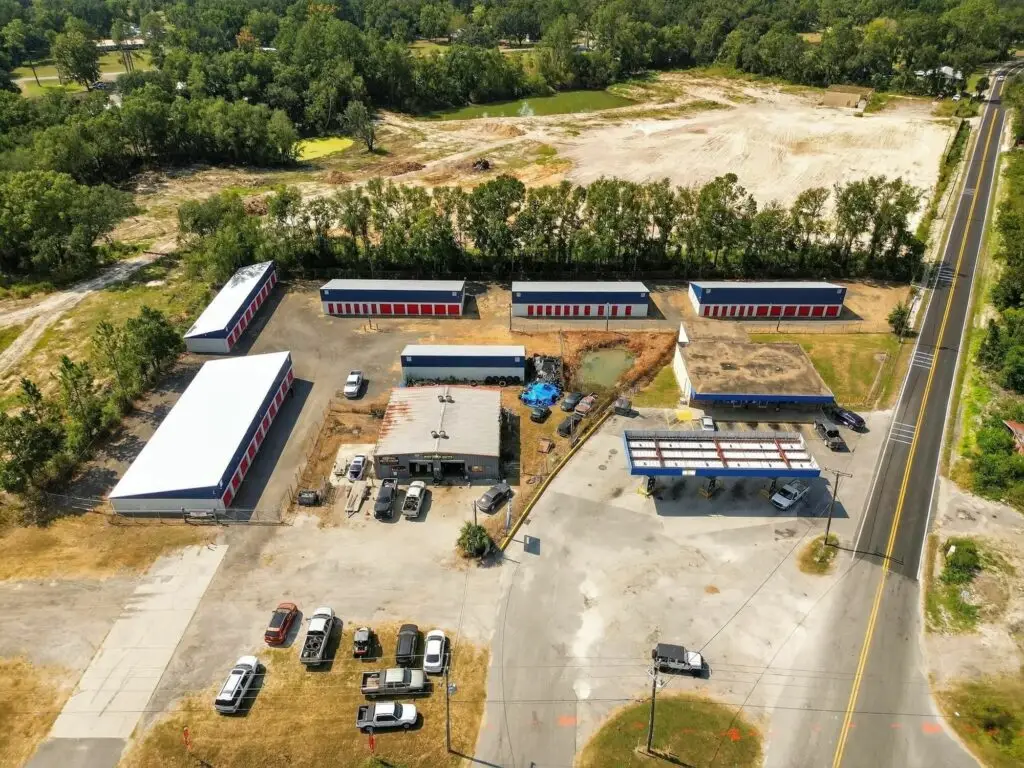
Some buyers are targeting stabilized, cash-flowing facilities with additional acreage for expansion. These properties offer existing income with the potential to increase rentable square footage and grow net operating income (NOI) over time.
Others are looking for more challenging value-add self-storage opportunities, including facilities with low occupancy, below-market rents, or operational inefficiencies. A property operating at 30% occupancy may not appeal to every investor, but for the right buyer, there can be significant upside through lease-up and improved management, assuming the local demand supports it.
Both strategies can make sense. It comes down to the acquisition basis, market fundamentals, and the buyer’s ability to execute.
Slower Self-Storage Development Doesn’t Eliminate Oversupply
While new development is slowing nationally, some markets are still dealing with self-storage oversupply from recent years. Fewer new facilities won’t necessarily lead to an immediate recovery in occupancy or rental rates.
For example, Yardi Matrix reports that Tampa experienced an 18.2% increase in storage inventory from new deliveries over the past three years, while advertised rental rates declined 4.4% year-over-year in July 2026. Atlanta has also seen substantial new supply, with deliveries totaling 14.2% of its starting inventory over the same period.
These numbers reinforce why evaluating local supply, square footage per capita, rental rates, occupancy, and competing developments remains critical when underwriting a self-storage investment.
Looking Ahead: The Self-Storage Investment Outlook for 2027
As new construction continues to moderate, I expect self-storage investors to remain focused on assets with identifiable upside, whether through expansion, lease-up, or operational improvements.
Opportunities remain for both buyers and sellers, but understanding the market is more important than ever. From identifying acquisition opportunities to properly positioning an asset for sale, having a strong understanding of local market fundamentals, property values, and active buyer demand can make a significant difference in getting deals across the finish line.
If you’re considering buying or selling a self-storage facility in the Southeast, connect with SVN Southland Commercial to discuss your investment goals and current market conditions.
Source: Yardi Matrix, Self Storage National Report, August 2026. National and metro-level figures reflect data reported through July or Q2 2026, as applicable.